
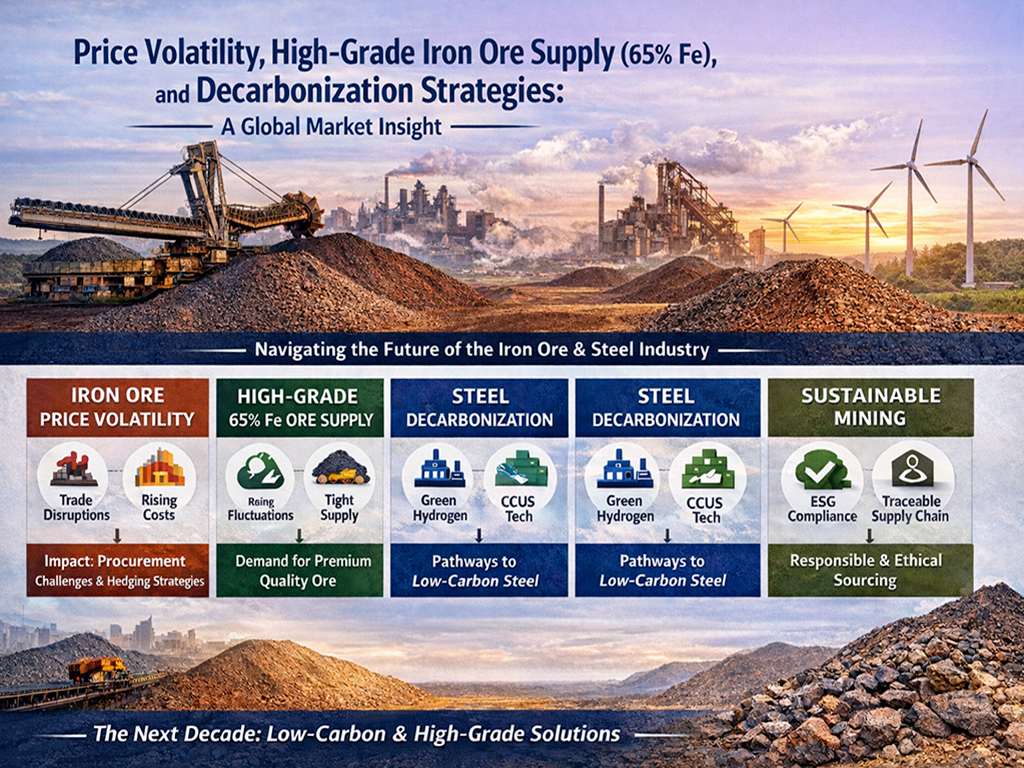
Price Volatility, 65% Fe Iron Ore Supply & Decarbonization Strategies | Global Mining Market.
Explore how iron ore price volatility, limited high-grade 65% Fe supply, and global decarbonization strategies are reshaping the steel and mining industry. Discover future-ready sourcing and sustainability solutions.
The global iron ore and steel industry is undergoing a historic transformation. Volatile commodity pricing, tightening supply of high-grade 65% Fe iron ore, and aggressive decarbonization targets are reshaping procurement strategies for steel producers, traders, and industrial buyers worldwide.
As governments push for net-zero emissions and manufacturers demand cleaner production, the importance of premium iron ore and sustainable mining practices has never been greater.
Contact
1. Understanding Iron Ore Price Volatility
Iron ore prices remain highly sensitive to:
- Global steel demand fluctuations
- Infrastructure and construction cycles
- Geopolitical trade disruptions
- Freight and logistics costs
- Energy and carbon pricing
In recent years, prices have experienced sharp swings due to:
- China’s changing steel production policies
- Supply disruptions from major mining regions
- Rising freight and fuel costs
- Carbon compliance costs for steelmakers
Impact on Buyers & Traders
Price volatility directly affects:
- Steel mill margins
- Procurement planning
- Long-term supply contracts
- Hedging and risk management strategies
This has driven a shift toward strategic sourcing and long-term partnerships with reliable high-grade iron ore suppliers.
2. The Growing Importance of High-Grade 65% Fe Iron Ore Supply
High-grade iron ore (65% Fe) is now a strategic resource in the global steel value chain.
Why 65% Fe Iron Ore Matters
Higher iron content delivers:
- Lower coke and coal consumption
- Reduced CO₂ emissions per ton of steel
- Higher blast furnace productivity
- Lower slag generation
- Improved operational efficiency
With global decarbonization targets accelerating, steelmakers increasingly prefer premium-grade ore to support cleaner steel production.
Supply Constraints
However, supply remains limited due to:
- Depletion of high-grade deposits
- Longer mine development timelines
- Stricter environmental approvals
- Concentration of reserves in a few countries
This supply tightness is creating long-term upward pressure on premium ore pricing.
3. Decarbonization Strategies Transforming the Steel Industry
The steel sector contributes nearly 7–9% of global CO₂ emissions, making it a major focus of climate policy worldwide.
Key Decarbonization Pathways
Steelmakers are investing heavily in:
🔹 Green Steel Production
Using renewable energy, hydrogen, and electric arc furnaces (EAF).
🔹 Hydrogen-Based DRI (Direct Reduced Iron)
Replacing coal with green hydrogen to reduce emissions by up to 95%.
🔹 Carbon Capture, Utilization & Storage (CCUS)
Capturing emissions from blast furnaces and reusing or storing CO₂.
🔹 High-Grade Ore Optimization
Using 65% Fe ore to reduce coke usage and furnace emissions.
4. The Strategic Role of Sustainable Mining & Responsible Sourcing
Sustainability is no longer optional — it is now a commercial requirement.
Leading steel producers demand:
- ESG-compliant mining operations
- Traceable supply chains
- Low-carbon logistics
- Transparent carbon reporting
This has positioned sustainable iron ore exporters as preferred partners in global trade.
5. Future Outlook: What Buyers and Investors Should Expect
Market Trends Driving the Next Decade
- Strong demand for green steel from automotive, construction, and energy sectors
- Premium pricing for 65% Fe iron ore
- Carbon border taxes impacting trade flows
- Expansion of hydrogen steelmaking hubs
- Long-term offtake contracts for high-grade ore
The future steel supply chain will be built around low-carbon inputs, clean energy, and high-grade raw materials.
Conclusion: Navigating the New Iron Ore Economy
Price volatility, tightening high-grade ore supply, and global decarbonization policies are redefining the iron ore and steel industry. Buyers, traders, and manufacturers who secure reliable access to 65% Fe iron ore and invest in low-carbon strategies will gain a significant competitive advantage.
The next generation of steel will be greener, cleaner, and smarter — powered by premium iron ore and sustainable mining.