
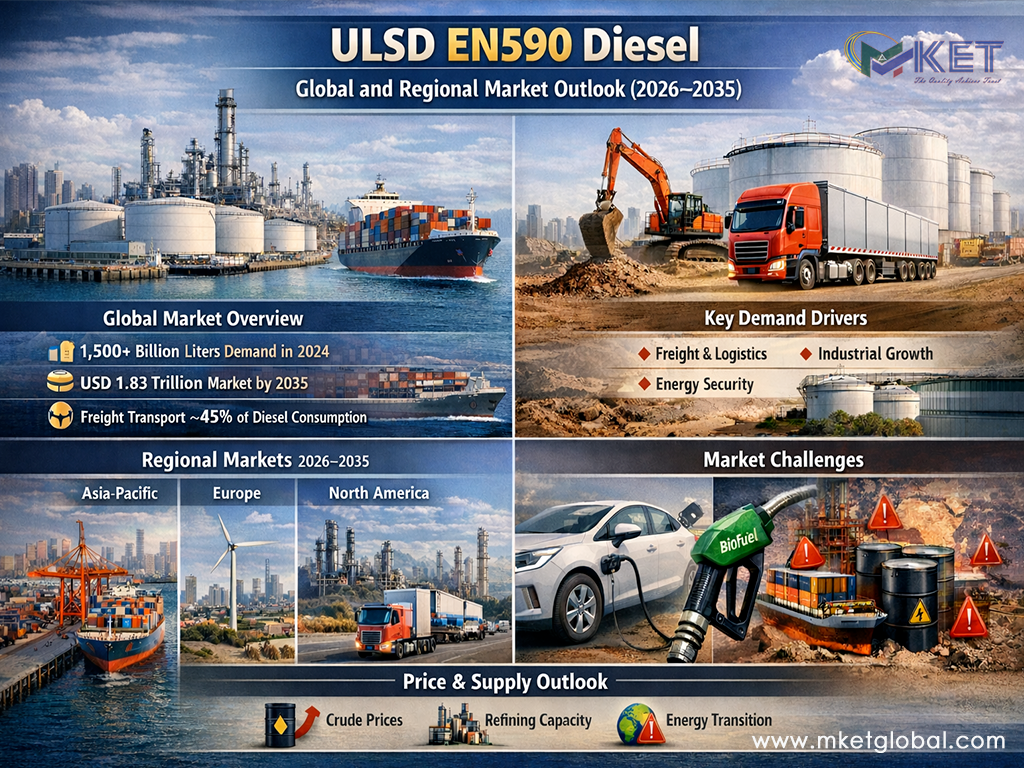
Market Outlook, Regional Trends & Strategic Buying Guide (2026–2030)
Explore the future demand for ULSD EN590 (10 ppm) diesel including global trends, regional outlooks, energy transition impacts, strategic procurement insights.
Ultra-Low Sulphur Diesel (ULSD) compliant with EN590 (10 ppm Sulphur) standards remains one of the most traded refined petroleum products worldwide. Despite rapid global discussions around decarbonization and electrification, EN590 diesel continues to play a critical role in transportation, logistics, industry, power generation, and blending with renewable fuels.
Contact Us
This combined analysis explores:
- Global and regional demand trends
- Structural drivers shaping EN590 consumption
- Risks and offsets from the energy transition
- A practical procurement and sourcing guide for buyers and traders
A. Why EN590 Diesel Demand Will Persist
1. Heavy-Duty Transport Dominance
Diesel remains the backbone fuel for:
- Trucks and long-haul freight
- Construction and mining equipment
- Agricultural machinery
- Backup power and generators
While electric mobility is advancing, heavy-duty transport electrification remains limited, particularly in developing economies due to cost, infrastructure, and range constraints.
2. EN590 as the Base Fuel for Blending
Even as renewable diesel (HVO) and biodiesel expand, EN590 continues to serve as:
- A blending base fuel
- A logistics and storage reference grade
- A compliance benchmark for sulphur regulations
This means energy transition does not eliminate EN590 demand—it reshapes it.
3. Industrialization & Infrastructure Growth
Rapid infrastructure development across Asia, Africa, and parts of Latin America continues to support diesel consumption in:
- Manufacturing
- Power generation
- Construction and logistics corridors
B. Regional Demand Outlook
Asia (Primary Growth Engine)
- India, Southeast Asia, and emerging Asian economies remain the strongest demand drivers
- Growth is supported by freight movement, industrial expansion, and population growth
- EN590 imports remain essential due to uneven refinery capacities
Outlook: Strong growth through 2030
Europe (Mature & Transitioning Market)
- Diesel demand is plateauing or declining due to:
- EV adoption
- Fuel efficiency standards
- Modal shifts to rail and public transport
- However, EN590 remains essential for commercial fleets and blending
Outlook: Stable to declining, but high-quality spec demand remains
Middle East & Africa
- Middle East acts as both a major producer and exporter
- Africa shows rising diesel demand due to limited electrification and growing transport needs
Outlook: Stable exports, rising regional consumption
Latin America
- Continued reliance on diesel for mining, agriculture, and transport
- Gradual adoption of renewables but slow displacement
Outlook: Moderate growth
What May Reduce Demand
C. Energy Transition: Risk or Reinvention?
- Electric vehicles in passenger transport
- Efficiency improvements
- Long-term hydrogen adoption in freight
What Sustains Demand
- Slow EV penetration in heavy-duty segments
- Blending mandates that still rely on diesel
- Limited infrastructure in emerging economies
Reality Check:
Diesel demand is not collapsing — it is rebalancing geographically and structurally.
D. Price, Supply & Market Volatility
Key factors influencing EN590 pricing and availability:
- Refinery maintenance cycles
- Seasonal demand spikes
- Shipping disruptions and freight costs
- Regional stock levels and prompt availability
Even when global supply appears balanced, regional tightness can create sharp price movements, making procurement strategy critical.
E. Strategic Buying & Procurement Guide for EN590
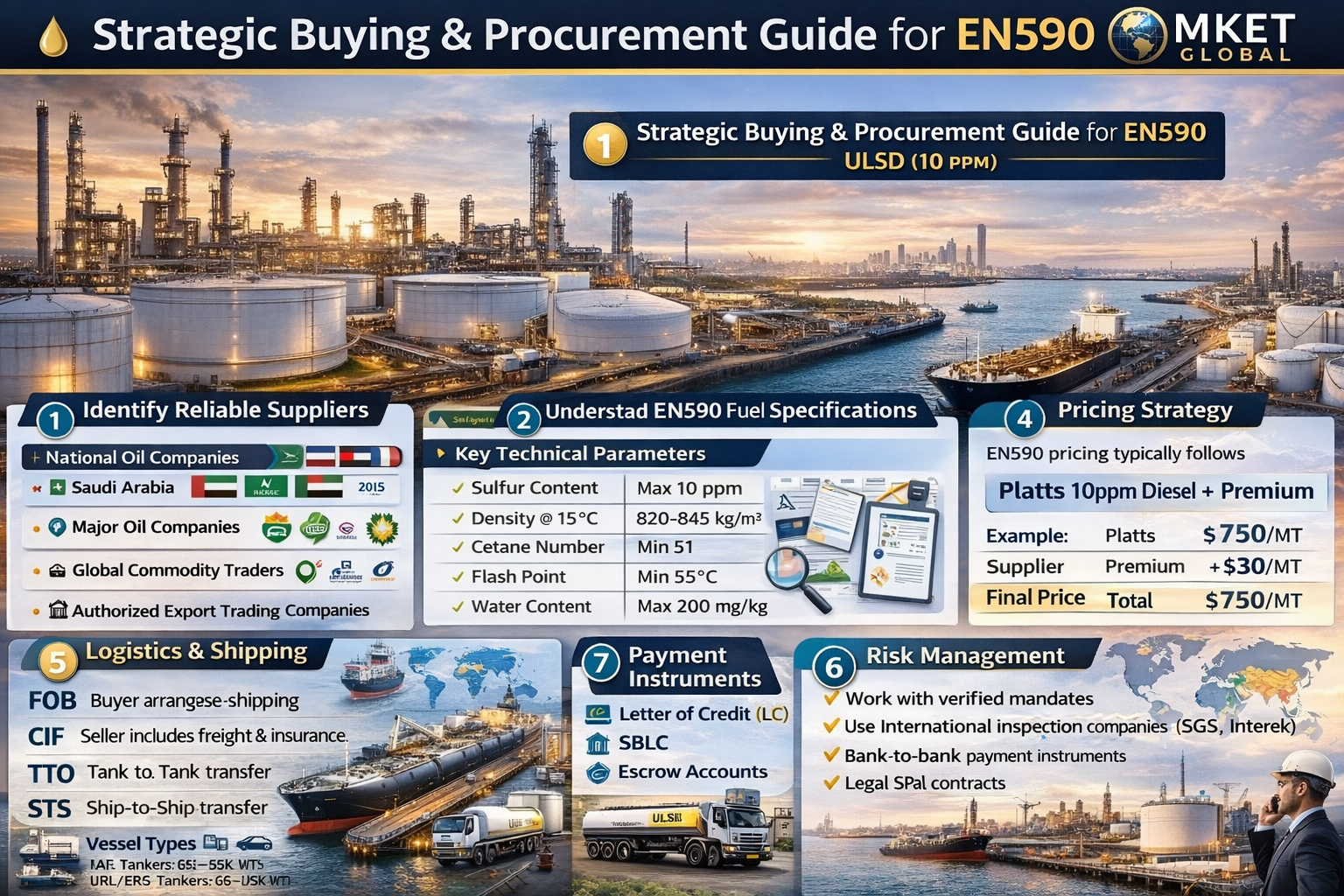
1. Diversify Supply Sources
Avoid dependence on a single region. Combine:
- Asia
- Middle East
- Europe (when arbitrage opens)
2. Contract Flexibility
Use:
- Spot + term contracts
- Optional volumes
- Price hedging mechanisms
3. Quality & Compliance Control
- Ensure strict EN590 (10 ppm) lab testing
- Validate documentation and certificates of quality
4. Monitor Key Indicators Weekly
- Refinery turnaround schedules
- Renewable diesel capacity additions
- Freight rates and shipping routes
F. Outlook Summary (2026–2030)
| Factor | Impact on EN590 Demand |
| Emerging market growth | Positive |
| Heavy-duty transport | Strong support |
| Renewable blending | Neutral to positive |
| Passenger EVs | Moderate negative |
| Policy & regulation | Region-specific |
Overall Forecast:
Global EN590 demand remains resilient, with growth concentrated in non-OECD markets and continued relevance in blended and industrial fuel systems.
Conclusion
ULSD EN590 diesel is not a declining commodity — it is a strategic energy product adapting to a transitioning world. For traders, bulk buyers, and energy companies, the opportunity lies in:
- Understanding regional demand shifts
- Building flexible supply chains
- Aligning procurement with energy transition realities
Those who adapt early will maintain cost efficiency, compliance, and supply security.